
What Is a Short, Equipment-Light Full-Body Strength Workout for Beginners?
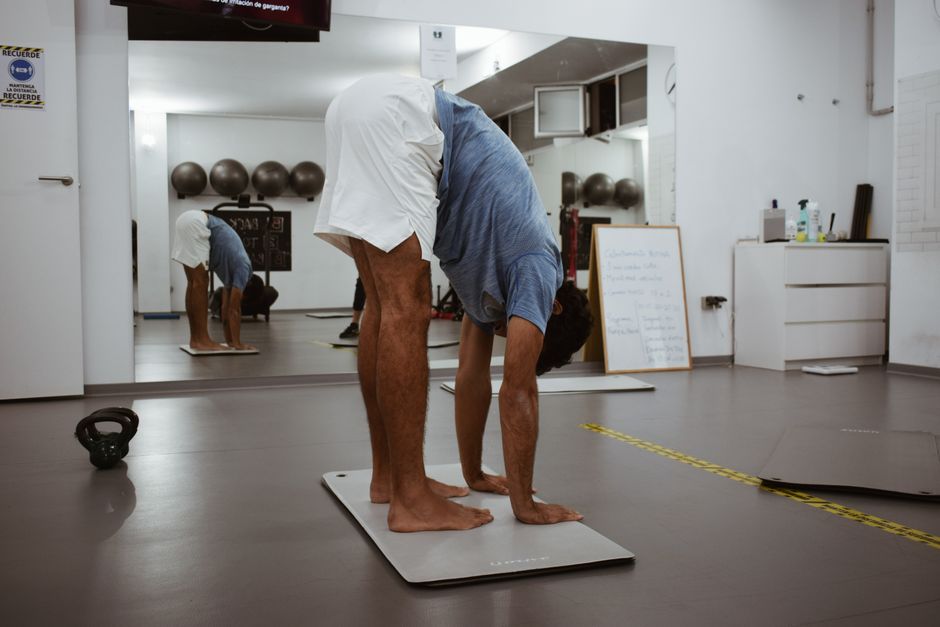
A simple 20-minute beginner routine pairs a squat, a hip hinge, a push, and a pull, with a brief warm-up and time to move between exercises. Start with one set of 8–12 controlled repetitions per movement, using body weight or a low-cost resistance band. Repeat the routine on two days each week, then progress by adding repetitions, choosing a harder variation, or adding resistance.
What is a simple strength workout I can finish in 20 minutes?
A simple 20-minute strength workout is a short circuit of squats, hinges, pushes, and pulls, performed at a pace that lets you keep good control. The timing is a practical plan, not a threshold established by the cited guidelines; leave enough time to set up safely and rest as needed.
Begin with a few minutes of easy movement to get ready. Then move through the four patterns below. Choose a version that lets you perform controlled repetitions, and stop the set when you cannot keep the movement steady.
| Movement | Beginner option | Low-cost equipment option |
|---|---|---|
| Squat | Chair sit-to-stand or bodyweight squat | Hold a securely closed backpack close to the body |
| Hinge | Hip hinge without added load | Hold a securely closed backpack with both hands |
| Push | Wall push-up or incline push-up against a stable surface | Use the same push-up variation; equipment is not required |
| Pull | Band row anchored according to the band maker's instructions | Resistance band row |
Do one set of 8–12 repetitions for each movement, the starting set size suggested by the CDC. The CDC says a strengthening activity should make it hard to do another repetition without help. Keep the effort controlled: a repetition that turns into a twist, bounce, or loss of balance is not a useful extra repetition.
This format keeps setup simple and gives each movement a place in the session. If the clock runs short, do fewer movements with care and return to the rest on another day, rather than rushing through every repetition.
Can I build strength at home without a gym or much equipment?
Yes, strength training at home can use body weight or elastic bands instead of gym machines or a standard dumbbell set. The CDC's examples of muscle-strengthening activity include push-ups, sit-ups, resistance bands, and gardening; the federal Physical Activity Guidelines also recognize body weight and elastic bands as resistance.
That makes an equipment-light plan workable, but the movements still need to cover the main muscle groups. The CDC names legs, hips, back, chest, abdomen, shoulders, and arms. A squat and hinge train lower-body patterns; a push works the front of the upper body; a row supplies a pulling pattern for the back and arms. A band is the most straightforward inexpensive way to make that pulling movement repeatable at home.
Household items can add resistance if they close securely and can be held without slipping. A backpack loaded lightly with stable items can serve for a squat or hinge, but load it gradually and keep it close to the body. Avoid improvised anchors or objects that shift, break, or make you lose balance. Equipment savings matter only when the setup stays safe.
Research also supports home exercise as a practical option, with an important limit. A 2021 systematic review and meta-analysis by Chaabene and colleagues covered 17 randomized trials and 1,477 healthy adults aged 65–83. It found small positive effects on strength and muscular endurance, and sessions of 30 minutes or less were associated with small positive effects on strength and balance. Those results concern older adults, so they do not establish the same effect for younger beginners.
Which basic movements should a beginner include in a full-body routine?
A beginner full-body routine should include a squat, a hip hinge, a push, and a pull, then add direct core work if time and ability allow. This selection covers several major movement patterns while keeping a short session easy to remember.
Squat: Sit toward a chair and stand, or perform a bodyweight squat to a comfortable depth. The chair provides a clear target and can help make the movement easier to control.
Hinge: Push the hips back while keeping the torso steady, then return to standing. Practice without weight first; later, a securely held backpack can add resistance.
Push: Use wall push-ups or incline push-ups on a stable surface. A higher hand position makes the movement easier; lowering the incline increases the challenge without requiring a dumbbell.
Pull: Use a resistance-band row, following the maker's instructions for anchoring and checking the band. If no safe pulling setup is available, do not replace it with an unstable door or furniture arrangement; acquire an inexpensive band or use a secure, purpose-built anchor.
The CDC suggests 8–12 repetitions as one set and describes one set as a starting amount, with two or three sets offering additional benefits. The American College of Sports Medicine's 2009 position stand describes novice resistance training at two to three days per week and a load that permits roughly 8–12 repetitions. The shared practical message is to start with a manageable set, then build only when the form remains sound.
Progress one feature at a time. Add repetitions within the target range first. When the top of the range feels controlled, increase the movement's range or move to a harder version, such as wall push-ups to incline push-ups. For exercises with added load, ACSM's 2009 guidance says to increase the load by 2–10% when someone can exceed the desired repetitions by one or two. That percentage applies to load progression, not a requirement to add weight to every exercise.
Frequently Asked Questions
How many days a week should I do a short strength workout?
The CDC recommends muscle-strengthening activity on at least two days each week, and ACSM guidance describes two to three full-body resistance-training days as a novice range. Leave room for recovery between sessions and adjust the schedule to your starting activity level.
How do I make bodyweight exercises harder as I get stronger?
First add repetitions within a controlled range, then increase the range of motion or choose a harder variation. If the exercise still feels manageable, add resistance with a band or a securely held household load. ACSM's 2009 guidance recommends increasing load by 2–10% when a trainee exceeds the target repetitions by one or two.
How can I fit strength training into a busy schedule?
Use a compact circuit and spread activity across the week rather than treating every session as one long block. The CDC says activity can be broken into smaller chunks; a short session still gives you a structured way to practice the major movement patterns.
For inactive adults, the U.S. Department of Health and Human Services advises starting at lower intensity and increasing activity gradually. A brief routine is a starting structure, not a test of willpower. Keep the movements clear, make the next step modest, and let consistency do the work.
Sources
- Centers for Disease Control and Prevention, What Counts as Physical Activity for Adults
- U.S. Department of Health and Human Services, Physical Activity Guidelines for Americans, 2nd edition (2018)
- American College of Sports Medicine position stand (2009), via PubMed
- Centers for Disease Control and Prevention, Physical Activity Guidelines for Adults
- Chaabene et al., Ageing Research Reviews (2021), via PubMed
Disclaimer: This article is for general information only and is not medical advice. It is not a substitute for diagnosis or treatment by a qualified healthcare professional. Always speak to your doctor before acting on anything you read here.
Keep reading

Which Prescription Weight-Loss Medication Works Best?
Compare semaglutide and tirzepatide trial results, side effects, treatment timelines, insurance access, costs, and weight regain after stopping.
Sam’s Club Infrared Saunas: Compare Cost, Setup and Recovery
Compare Sam’s Club infrared sauna prices, electrical requirements, warranty details, return terms and what recovery research does—and does not—show.
Can Fast Weight-Loss Drinks Work, or Should I Replace Sugary Beverages?
An evidence-led guide to beverage swaps, green tea, protein shakes, detox claims, labels, and stimulant safety.
What Should a Woman Weigh for Her Height?
Use BMI as a starting screen, then read waist size, muscle mass, fitness, menopause changes, and clinical markers together.