
What Should a Woman Weigh for Her Height?
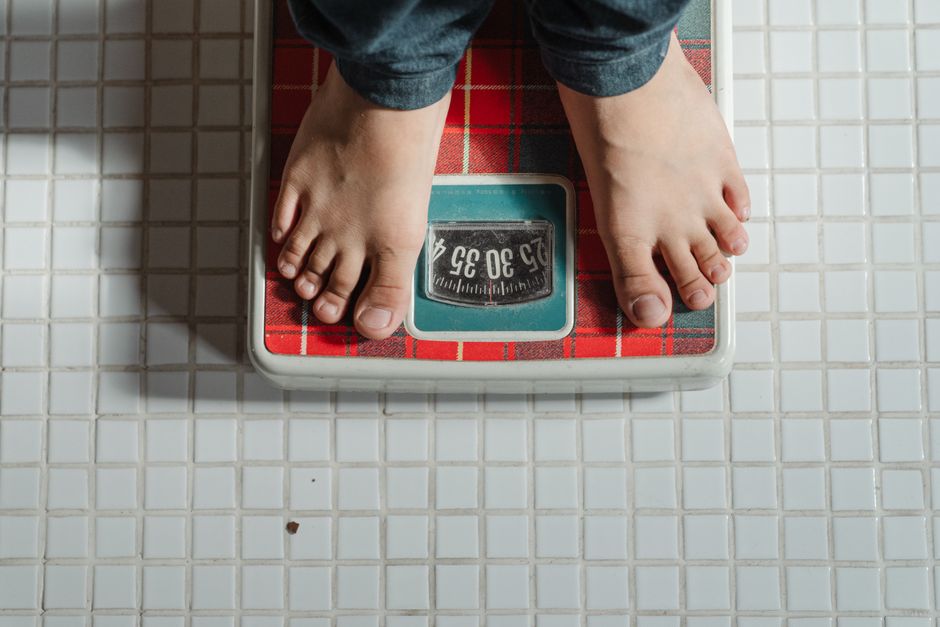
There is no single healthy weight for every woman at a given height. Use BMI as a first screen: 18.5 to 24.9 is the CDC's healthy-weight range for adults, but the result needs a waist measurement, body-composition context, fitness, health history, examination findings, and laboratory results before it means much on its own.
What should a woman weigh for her height?
A woman should not chase one scale number for her height. The CDC's 2024 BMI guidance places adult BMI below 18.5 in the underweight category, 18.5 to 24.9 in the healthy-weight category, 25.0 to less than 30.0 in the overweight category, and 30.0 or higher in the obesity category.
BMI is weight relative to height. It is useful because it turns two measurements into a common screen. It is limited because it cannot say what the weight is made of or where it sits on the body.
| Adult BMI category | BMI range | What it is |
|---|---|---|
| Underweight | Below 18.5 | A CDC 2024 screening category |
| Healthy weight | 18.5 to 24.9 | A CDC 2024 screening category |
| Overweight | 25.0 to less than 30.0 | A CDC 2024 screening category |
| Obesity | 30.0 or higher | A CDC 2024 screening category |
A range is a map, not a diagnosis. The CDC says BMI should sit beside medical history, health behaviors, physical-exam findings, and laboratory results. That is the useful frame: begin with the number, then test whether the rest of the picture agrees.
The best target is not a smaller number in isolation. It is a set of signals that make sense together.
Is BMI accurate for women who lift weights or exercise regularly?
BMI is less precise for women with substantial muscle mass because it cannot separate fat from muscle or bone. The CDC's 2024 FAQ states that someone with substantial muscle can land in the overweight or obesity BMI categories even when BMI alone cannot identify whether the added weight is fat, muscle, or bone.
That does not make BMI useless. It changes its job. Treat it as a flag for a broader look, not proof that a body is healthy or unhealthy.
Fitness belongs in that broader look. CDC 2024 healthy-weight guidance describes at least 150 minutes a week of moderate activity or 75 minutes a week of vigorous activity, plus muscle-strengthening activity on 2 or more days a week. Those activity benchmarks describe behavior; they do not convert a BMI category into a personal diagnosis.
Strength, cardiovascular capacity, energy, blood pressure, and laboratory findings answer different questions than the scale. Weight is one reading. Health is a panel.
Can I be healthy if my BMI says I am overweight?
Yes, a BMI in the overweight category does not settle whether a woman is healthy. The CDC's 2024 BMI guidance calls BMI a screening measure and says providers need the rest of the clinical picture, including health behaviors, physical findings, and laboratory results.
There is no clean swap where a good workout erases every other marker, or where one BMI label erases fitness. The answer comes from the pattern.
Abdominal fat adds a distinct piece of that pattern. A 2020 CDC Preventing Chronic Disease review covering 38 cross-sectional studies and 2 cohort studies, representing 105 to 137,256 adults, found moderate cardiovascular-disease screening ability for all three measures. For women, the pooled prediction values were 0.66 for BMI, 0.69 for waist circumference, and 0.71 for waist-to-hip ratio.
The gap is small. The lesson is not. Body size and body location are different facts.
Menopause makes this distinction sharper. A 2022 review in Obesity reports average gains of 5 to 7 pounds during the menopause transition, with wide individual variation. It also describes increased abdominal fat and reduced fat-free mass even when body weight barely changes. The scale can hold still while the body changes.
What measurements should women use besides BMI?
Women should use waist circumference alongside BMI, then bring body composition, fitness, blood pressure, laboratory results, energy, and menstrual or menopause context into the same conversation. This is a dashboard, not a scorecard.
For waist circumference, the CDC's 2024 healthy-weight guidance says to place the tape around the middle just above the hip bones and measure after breathing out. In that same 2024 guidance, a waist above 35 inches is associated with higher health risk for women.
Consistency matters. An international 2020 expert consensus recommends routine waist measurement with BMI because BMI alone does not adequately capture abdominal adiposity or cardiometabolic risk. For repeat tracking, it advises using the same protocol each time, at either the iliac crest or the midpoint between the last rib and iliac crest.
Waist-to-hip ratio can add another view of fat distribution. The supplied sources do not provide one universal cutoff or a hip-measurement method, so a ratio should not be turned into a false line of certainty. The 2020 CDC review supports its use as added screening context, not as a solo verdict.
Clinical markers complete the frame. Blood pressure and laboratory results are named by the CDC as information a provider can use beside BMI. Symptoms belong there too. For readers facing health treatment, this site also covers what to expect during breast cancer radiation; weight categories never replace condition-specific clinical care.
A scale tells you how much. A health dashboard tells you what the number leaves out.
Frequently Asked Questions
Does menopause change what a healthy weight looks like?
Menopause can change body composition even when the scale changes little. A 2022 review in Obesity reports average gains of 5 to 7 pounds during the menopause transition, alongside more abdominal fat and less fat-free mass. The same review links a waist above 35 inches with excess mortality risk even among women in the CDC healthy-BMI range.
What is a healthy waist measurement or waist-to-hip ratio for women?
CDC 2024 guidance identifies a waist measurement above 35 inches as a higher-risk marker for women. The research sources provided do not give a single waist-to-hip ratio cutoff or a hip-measurement protocol. A 2020 CDC review found waist-to-hip ratio predicted cardiovascular disease better than BMI, so it can add context when measured consistently.
When should I discuss my weight or unexplained weight changes with a clinician?
A clinician can put BMI, waist size, symptoms, examination findings, and laboratory results into one assessment. The NIDDK's 2024 diabetes guidance lists unexplained weight loss among possible type 1 diabetes symptoms and says to discuss symptoms with a primary health care professional and ask whether diabetes testing is appropriate. Increased urination, thirst, hunger, blurred vision, fatigue, slow-healing sores, or frequent infections belong in that conversation.
Sources
- Centers for Disease Control and Prevention: BMI Frequently Asked Questions
- Centers for Disease Control and Prevention: Healthy Weight
- CDC Preventing Chronic Disease: BMI, Waist Circumference, and Waist-to-Hip Ratio Review
- Obesity: Menopause Transition and Body Composition Review
- International Consensus on Waist Circumference and Cardiometabolic Risk
- National Institute of Diabetes and Digestive and Kidney Diseases: Diabetes Symptoms and Causes
Disclaimer: This article is for general information only and is not medical advice. It is not a substitute for diagnosis or treatment by a qualified healthcare professional. Always speak to your doctor before acting on anything you read here.